Embroidery vs. Screen Printing: Choosing the Right Method for Work Uniforms
Mar
When outfitting your company with branded uniforms, one of the most important decisions you’ll make is how to apply your logo and branding. To decide between embroidery vs. screen printing, you’ll need to consider durability, cost-effectiveness, and how well your uniforms will hold up over time.
This guide breaks down the differences between both customization methods to help you evaluate silkscreen vs. embroidery (or both) based on your needs.
What To Know About Uniform Embroidery
Embroidery has long been the gold standard for professional uniforms because it offers a polished appearance that communicates quality and permanence.
What Is Embroidery?
Embroidery is a decoration method that stitches thread directly into fabric to create logos, text, and designs. Rather than applying pigment to the surface of a garment, embroidery physically integrates the design into the material itself. It creates a raised, textured appearance that’s immediately recognizable as premium branding.
How Does Embroidery Work?
The embroidery process begins by converting your artwork or logo into a file that embroidery machines can read. Once the design is digitized, industrial embroidery machines use threaded needles to stitch your design into the garment, following the digital pattern to build colors, shapes, and text.
Advantages of Embroidery
Embroidery offers significant benefits for organizations seeking long-term work uniform solutions. Stitched designs withstand repeated industrial washing, daily wear, and demanding work environments without fading or deteriorating.
The textured, dimensional quality of embroidered logos conveys professionalism and attention to detail, making it ideal for client-facing roles, executive apparel, and organizations where brand perception is especially important. Embroidery also works well on heavy-duty garments like jackets and outerwear.
Note that very small text and intricate design elements may not translate well to stitching, and lightweight or stretchy fabrics may not provide adequate stability for embroidery, potentially causing puckering or distortion.
What Is Embroidery Best For?
Embroidery is an excellent choice for:
- Executive and management apparel
- Outerwear
- Heavy-duty workwear
- Hats and headwear
- Long-term uniform programs where garments remain in service for years
- Client-facing roles where professional appearance impacts brand perception
- Organizations prioritizing consistent branding across all locations
What To Know About Screen Printing
Screen printing remains one of the most widely used decoration methods for garments, particularly when organizations need vibrant colors and cost-effective solutions or large orders.
What Is Screen Printing?
Screen printing transfers ink onto fabric through a mesh screen. Intricate, colorful designs are created by applying multiple layers of different colors directly to the garment’s surface.
How Does Screen Printing Work?
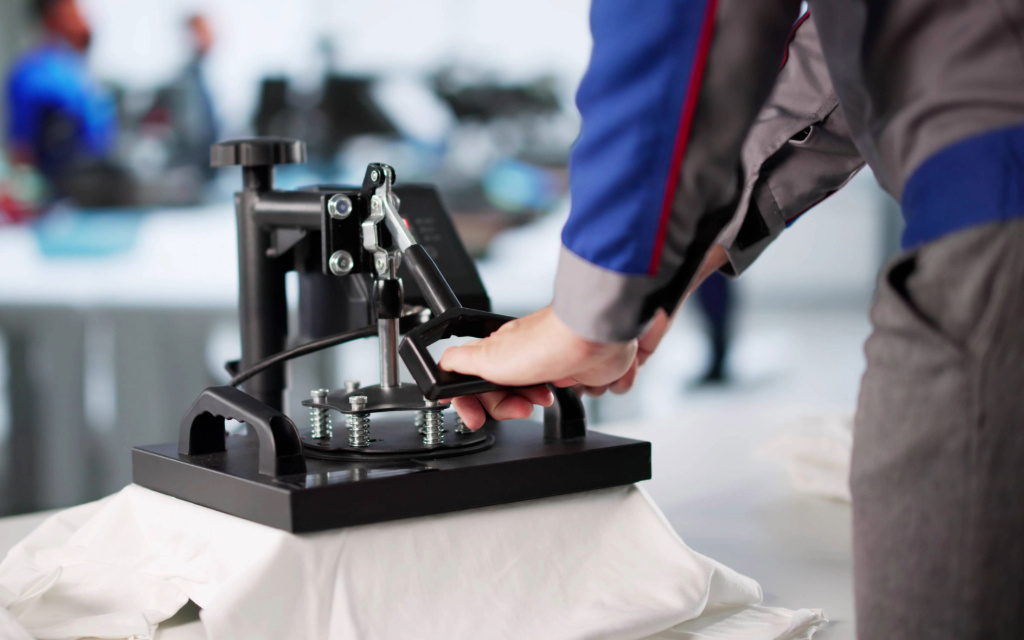
The screen printing process involves creating screens for each color in your design. Ink is applied to each screen and pushed through mesh to imprint colors onto fabric. After each color layer is applied, the ink is cured using heat to set it permanently into the fabric.
Advantages of Screen Printing
After the initial screen setup, the per-garment cost decreases significantly with larger order quantities, making screen printing economical for high-volume uniform programs.
Screen printing produces bright, saturated colors that stand out, and it’s a lower cost alternative to embroidery for large-scale orders. Unlike embroidery’s raised texture, screen printing creates a flat design that doesn’t add bulk or weight to garments, which can reduce shipping costs when dispatching uniforms to other locations.
Disadvantages of Screen Printing
Screen printing is a great choice for many uniforms but it isn’t always the right choice. Some of the drawbacks of screen printing include:
- Printed designs may crack, fade, or peel with repeated washing and wear, particularly on garments subjected to industrial laundering or harsh work conditions.
- Screen printing generally doesn’t match embroidery’s longevity for uniforms requiring a multi-year service life.
- Screen printing works best on cotton and cotton-blend fabrics, meaning performance fabrics and certain technical garments may not accept screen printing effectively.
What Is Screen Printing Best For?
Screen printing is great for organizations that need:
- T-shirts
- Large graphics
- Maximum visual impact
- Promotional apparel
- High-volume orders where per-piece cost matters
- Designs incorporating multiple colors or complex details
Embroidery vs. Screen Printing: Key Differences
Understanding the practical differences between these decoration methods can help your organization make the best decision for your specific uniform and branded apparel needs.
Durability
When comparing printed vs. embroidered designs for long-term uniform programs, embroidery consistently outperforms screen printing in durability. Stitched designs maintain their appearance through hundreds of wash cycles without significant degradation, while screen printing shows wear more quickly, colors may fade, and designs may crack, particularly at stress points or fold lines.
Texture and Feel
Embroidered designs create raised, three-dimensional branding with substantial texture that enhances their perceived quality but also adds stiffness to the decorated area. Screen printing produces smooth, flat designs that don’t alter the fabric’s original texture, which maintains the garment’s natural drape and feel.
Color Variety and Detail
Screen printing is ideal for reproducing vibrant colors, gradients, and photographic detail. Embroidery typically works best with simplified logos using a limited number of colors. While modern embroidery can approximate gradients through stitch techniques, fine color transitions and photographic detail are better suited to screen printing.
Fabric Compatibility
Embroidery performs best on structured fabrics like polo shirts, jackets, and workwear made from durable materials. Screen printing works well on T-shirts, lightweight uniforms, and cotton-based garments. However, highly textured fabrics, moisture-wicking materials, and technical performance wear may not accept screen printing ink evenly.
Small Details and Logo Complexity
Designs with intricate details, thin lines, or text smaller than 6-8mm in height often become illegible when embroidered. Screen printing handles fine details more effectively, reproducing small text and complex elements with greater clarity.
Order Quantity and Scalability
Embroidery requires one-time digitizing but has relatively consistent per-piece costs regardless of quantity. Screen printing involves screen setup costs for each color, but per-garment costs decrease substantially with larger orders.
For small orders or ongoing uniform programs with variable quantities, embroidery often proves more economical. For large orders, screen printing may offer better value once quantities exceed setup cost thresholds.
Care and Maintenance
Embroidered garments maintain a professional appearance with standard laundering, making them suitable for industrial washing programs and demanding work environments. Screen-printed garments require more careful laundering to maximize design life. That means turning garments inside out, using cold water, and avoiding high-heat drying to preserve printed designs.
Printed vs. Embroidered Uniforms: Which Is Better?
The right type of decoration depends on how your team uses their uniforms, where they work, and what your branding goals are.
Usage and Work Environment
Your work environment conditions will heavily influence your screen printing vs. embroidery decision.
Healthcare professionals wearing scrubs through daily shifts, industrial workers exposed to harsh conditions, and culinary teams working in demanding kitchen environments will all benefit from the superior durability and fade resistance of embroidered uniforms.
Screen printing is great for uniforms in controlled environments and situations where visual impact outweighs long-term durability requirements.
Garment Type and Placement
Polos, jackets, and structured workwear showcase embroidery well, with chest logos and sleeve branding maintaining a professional appearance through extended wear. Hats and caps almost universally use embroidery due to the structure of the hat’s fabric and its curved surfaces. T-shirts, lightweight scrubs, and casual uniforms often work better with screen printing, particularly when larger graphics or full-panel designs are needed.
Branding Consistency Across Teams
Embroidery provides exceptional color matching and design consistency, meaning that uniforms decorated months or years apart will have nearly identical embroidery vibrance. This consistency means a more cohesive brand presentation across your entire organization. Screen printing can achieve good consistency but requires careful color management and quality control, particularly when reordering uniforms months or years after the first order.
Cost Considerations: Printing vs. Embroidery
Understanding cost structures helps organizations make financially sound decoration decisions without sacrificing quality or durability.
Setup Costs and Artwork Preparation
Embroidery requires digitizing your logo into a stitch file, which is a one-time cost. Screen printing requires creating screens for each color in your design. These setup costs are absorbed across the order quantity, making screen printing more economical as the size of the order increases.
Long-Term Value for Uniform Programs
When evaluating embroidery vs. printing costs, consider your total program expenses beyond initial decoration. Embroidered uniforms typically last longer and maintain a professional appearance through more wash cycles, reducing replacement frequency and long-term costs. Screen-printed uniforms may offer lower initial costs but could require more frequent replacement as designs fade or crack.
Choosing Between Screen Print vs. Embroidery
There isn’t one correct choice when you’re deciding between embroidery vs. screen printing because you need to match the decoration technique to your specific requirements. Embroidery delivers unmatched durability, a professional appearance, and long-term value for structured garments and permanent uniform programs. Screen printing provides cost efficiency, color vibrancy, and flexibility for larger designs and high-volume orders.
Request a Custom Work Uniform Solution
Ready to develop a uniform program that supports your organization’s unique needs? Request a custom solution and let us help you create uniform programs that combine the right decoration methods with quality garments and efficient management systems. Contact us for a consultation to explore how our in-house team delivers consistent, professional screen printing and embroidery results.
Embroidery vs. Screen Printing FAQ
What lasts longer, screen print or embroidery?
Embroidery lasts significantly longer than screen printing.
Stitched designs maintain their appearance through hundreds of wash cycles without fading, cracking, or peeling. Screen printing can show wear over time, especially with frequent washing or industrial laundering. For uniforms that need to stand up to years of work, embroidery consistently outperforms screen printing in durability.
What are the disadvantages of embroidery?
Embroidery’s main disadvantages include:
- Higher costs for large, complex designs (due to increased stitch counts)
- Difficulty reproducing very small text or intricate details
- Fabric limitations (lightweight or stretchy materials may pucker or distort under stitching)
Embroidery works best with simplified logos using solid colors rather than photographic images or complex gradients.
Which is better, printed or embroidered?
Choosing between embroidered vs. screen printed really depends on what you need. Embroidery is best for professional uniforms, outerwear, and long-term uniform programs where durability matters. Screen printing works better for t-shirts, large graphics, and high-volume orders where cost efficiency is important.
Consider your work environment, garment type, logo complexity, and the expected lifespan of your uniforms when choosing.
Is embroidery cheaper than printing?
Embroidery typically costs more per piece for small orders but may offer better long-term value due to superior durability. Screen printing often has lower per-piece costs for large orders due to the setup cost distribution on higher-quantity orders.
Embroidered uniforms generally last longer and maintain their appearance better, which could lower your replacement costs over time. Total program cost depends on order size, design complexity, and the expected lifespan of the garment.
Have a Question or Project in Mind?
We help organizations with managed uniform programs, branded apparel, print, signage, and promotional programs across multiple locations.
Let’s connect and start a conversation.