
Work Boot Guide: How to Choose the Right Safety Boots for the Job
Mar
Work boots are one of the most important pieces of personal protective equipment on any jobsite. The right work boots protect workers from impacts, slips, electrical hazards, and fatigue during long shifts. The wrong boots can lead to injuries, discomfort, and lost productivity. Many companies manage footwear through employee uniform programs that help workers get the right PPE without upfront cost.
This Work Hard Dress Right guide explains how to choose the right work boots for your trade, including the difference between steel toe and composite toe boots, slip resistance, EH ratings, waterproofing, and the newest footwear technologies.
Steel Toe vs Composite Toe Boots: What’s the Difference?
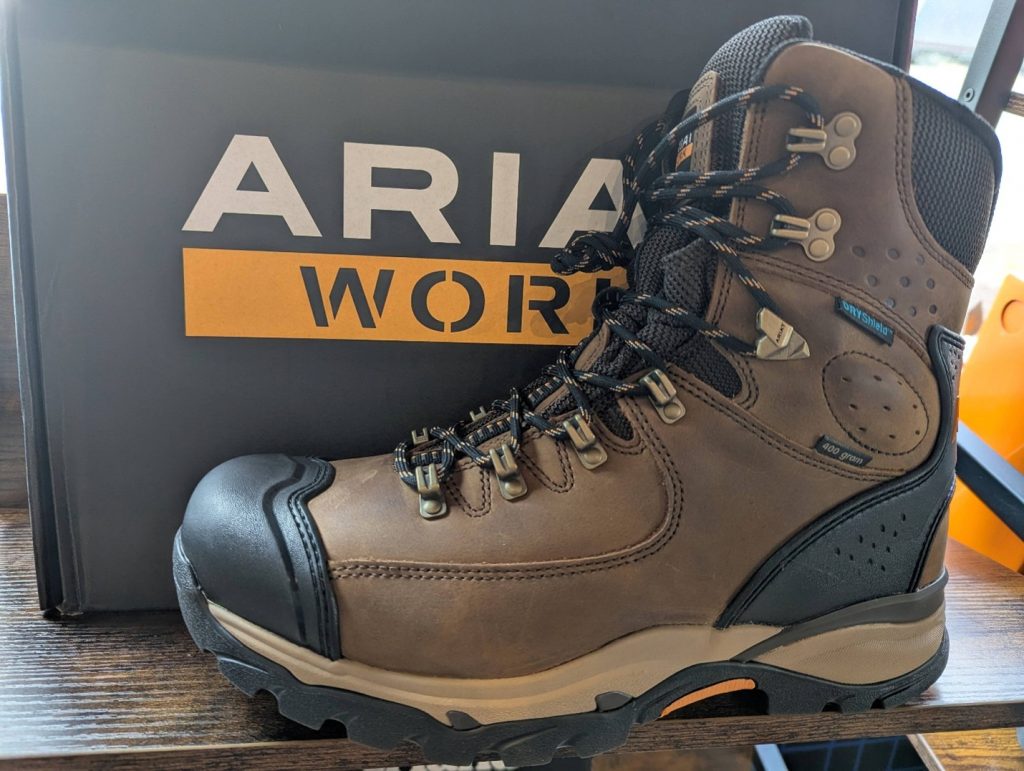
One of the most common questions workers ask when choosing work boots is whether to select steel-toe or composite-toe protection. Steel-toe and composite-toe boots provide the same ASTM-certified protection against impact and compression. The difference lies in weight, temperature transfer, and jobsite suitability. Steel toes are slimmer and often more durable under heavy use, while composite toes are lighter, non-metallic, and more temperature neutral. The best choice depends on the hazards and working conditions of the job.
The chart below highlights the key differences between steel-toe and composite-toe boots.
| Feature | Steel Toe Boots | Composite Toe Boots |
|---|---|---|
| Protection Standard | ASTM impact & compression rated | ASTM impact & compression rated |
| Weight | Typically heavier | Typically lighter |
| Fit Profile | Slimmer toe design | Slightly bulkier toe box |
| Temperature Transfer | Conducts heat and cold | Less temperature transfer |
| Material Construction | Steel safety cap | Reinforced composite materials |
Steel-Toe Boots
Steel-toe boots are the traditional choice for heavy-duty environments.
Best for:
- Construction
- Manufacturing
- Warehousing
- Material handling
Why choose a steel toe:
- Certified impact protection- meets ASTM impact and compression standards (same certified protection as other safety toes)
- Slimmer low profile fit – easier to maneuver in tight spaces
- Long term durability – performs well under sustained use
Something to consider:
- Can conduct heat and cold
- Should be replaced after a severe impact — denting may reduce protective clearance
According to Ariat Industrial Business Development Manager Hunter Fuqua, “Steel-toe still plays an important role in many trades, but today’s challenge is balancing protection with all-day comfort, especially for workers who never stop moving.”
Composite-Toe Boots
Composite-toe boots use non-metal materials, most commonly reinforced fiberglass or similar advanced composites.
Best for:
- Electricians
- Utilities
- Aviation & logistics
- Jobs with metal detectors
Why choose a composite toe:
- Lighter weight
- Non-metallic (won’t trigger detectors)
- Better temperature neutrality
Things to consider:
- Slightly bulkier toe shape in some designs
- Should be replaced after a severe impact — damage may not be visible, and protection can be compromised
- Tends to be more expensive than steel or alloy styles
Slip Resistance
This is perhaps the most overlooked safety feature. Slips, trips, and falls remain a common workplace injury—especially in environments with oil, water, mud, or uneven terrain.
What makes a boot slip-resistant?
- Rubber compound (not all rubber grips the same)
- Tread pattern and lug depth
- Flexibility that maintains surface contact
Advanced Outsole Technology: Vibram Megagrip Pro
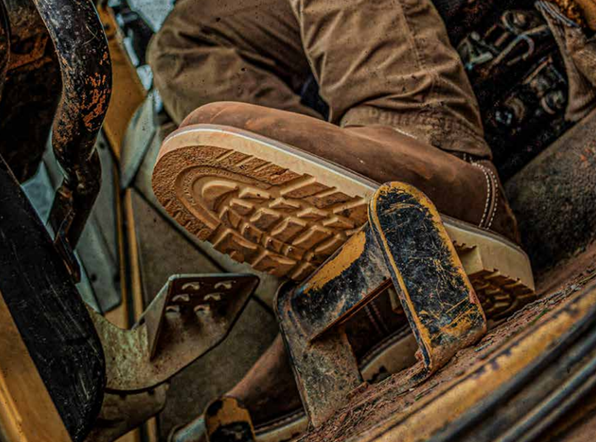
Some modern work boots feature advanced outsole compounds engineered to provide exceptional grip in both wet and dry conditions while standing up to rough terrain.
Especially valuable for:
- Outdoor trades
- Infrastructure work
- Landscaping and utilities
- Jobsites with mixed surfaces
“Traction isn’t just about aggressive tread—it’s about how the outsole compound performs across different surfaces and conditions throughout a long workday,” said Erin Krebs, Northeast Territory Manager for Warson Brands, the manufacturer and distributor of occupational footwear brands Reebok Work®, Rockport Works®, Florsheim Work®, and other proven safety footwear lines.
“You can also look to styles that offer the best slip-resistance, especially those with the latest ASTM-SRO slip rating for superior traction performance.”
Electrical Hazard (EH) Boots: Who Needs Them?
Electrical Hazard (EH) rated boots help reduce the risk of electric shock by providing a secondary source of protection from live circuits.
Common trades requiring EH footwear:
- Electricians
- Utility workers
- Maintenance technicians
EH boots are not a replacement for proper electrical PPE but are an essential additional layer of protection.
“Electrical Hazard–rated footwear is designed as a secondary layer of protection, not a substitute for proper electrical PPE,” said Workwear Outfitters Account Executive Cliff Blood. “In environments where accidental contact with live circuits is possible, EH boots help reduce risk by insulating the worker from the ground.”
Static Dissipative (SD) Footwear
Static dissipative footwear protects sensitive equipment by directing built-up static electricity safely to the ground.
Common industries requiring SD footwear:
- Computer part manufacturing
- Automotive manufacturing
- Clean-room environments
Static dissipative footwear is available in three protection levels — SD10, SD35, and SD100 — each designed for different environments and sensitivity requirements. These shoes safely channel built-up static electricity to the ground, helping prevent electrostatic discharge (ESD) that can damage delicate electronic components and finished products.
Waterproofing: Stay Dry Without Overheating
Workers who spend long hours outdoors often need waterproof work boots to protect against rain, mud, and wet ground conditions that can quickly soak ordinary footwear.
Waterproof vs. Water-Resistant
- Waterproof boots block outer moisture completely
- Water-resistant boots repel light moisture but offer greater breathability
Who benefits most from waterproof boots?
- Construction and outdoor trades
- Landscaping and grounds crews
- Utility and road work
“The goal with waterproof footwear isn’t just keeping water out, said Fuqua, “It’s managing heat and moisture inside the boot so workers stay comfortable through long shifts.”
New Footwear Technologies: Protection Without Stiffness
Terra Puncture Resistant Construction
Innovation that delivers puncture-resistant protection, while maintaining comfort and performance. Instead of a rigid steel plate underfoot, today’s puncture-resistant plates are made from flexible multi-layered fabrics, that maintain flexibility while maximizing safety. They act under the same principle as bulletproof vests; they’re there when it matters most, but hardly noticeably otherwise.
Benefits:
- Enhanced underfoot protection
- Maintained flexibility
- Torsional rigidity that improves lateral support
- No compromise to all-day comfort
As Blood explains, “How safety components are layered inside a boot can make a huge difference in comfort, flexibility, and long-term wearability—without compromising protection.”
Best Work Boot Features for Different Trades
Construction & Heavy Labor
Construction workers often need work boots that combine strong toe protection, traction, and durability for demanding jobsite conditions.
- Steel or composite toe
- Slip-resistant outsole
- Puncture resistance
- Waterproofing
Electrical & Utilities
Electricians and utility workers require boots designed to reduce electrical hazards while maintaining traction and comfort during long shifts.
- Composite toe
- EH rating
- Slip resistance
- Weather protection
Warehousing & Logistics
Warehouse employees and logistics workers benefit from lighter safety boots that reduce fatigue while still protecting against impacts and slips.
- Lightweight composite toe
- Slip resistance
- Comfort cushioning
Outdoor & Landscaping
Landscaping crews and outdoor trades need work boots that perform in mud, wet grass, and uneven terrain.
- Aggressive traction
- Waterproof construction
- Flexible midsole
Comfort, Fit & Compliance Matter More Than You Think
Even the safest boot won’t do its job if it’s uncomfortable. Poor fit leads to fatigue, early replacement, and workers avoiding PPE altogether. For employers building a safety culture, providing proper footwear is also a critical workplace safety strategy. Protecting workers’ feet is one of the most practical steps a business can take to reduce injuries and improve compliance.
Modern work footwear focuses on:
- Ergonomic cushioning
- Better weight distribution
- Materials that move naturally with the foot
Comfort directly affects safety compliance. Workers are far more likely to wear boots correctly when they feel good all day.
“Comfort isn’t a luxury in safety footwear, it’s a requirement,” said Krebs. By integrating athletic performance technologies into work boots, we help workers stay energized, supported, and compliant throughout long, demanding shifts.”
How to Choose the Right Work Boots
When selecting work boots, start by identifying the primary hazards in your workplace. Consider toe protection requirements, slip resistance, electrical hazard ratings, waterproofing, and overall comfort for long shifts.Many employers support safety footwear through structured workplace programs that help ensure workers are properly protected while maintaining compliance with safety standards.
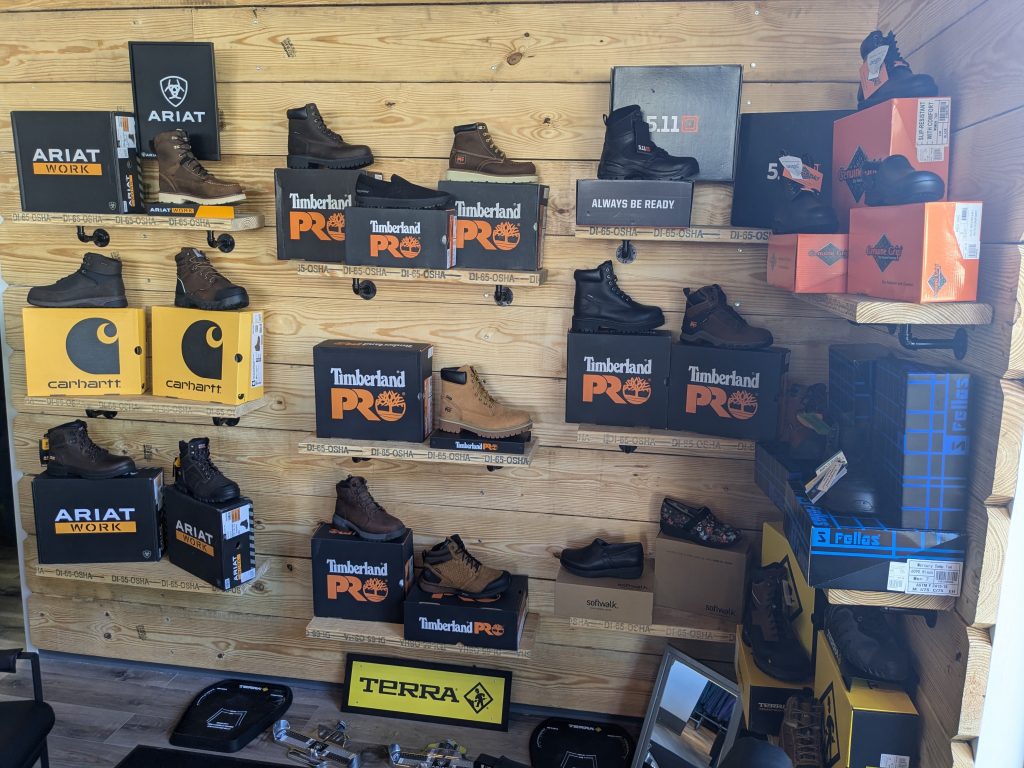
Finding Quality Work Boots in Newark, NJ
Workers across construction, utilities, manufacturing, healthcare, and logistics rely on dependable safety work boots every day. For those looking for work boots in Newark, NJ, the Work Hard Dress Right team helps workers and employers find footwear that meets safety standards while delivering comfort and durability on the job. Our uniform store at 283 Ferry Street in Newark’s Ironbound district carries safety footwear designed for demanding trades, along with expert guidance on choosing the right protection for your job.
Key Takeaway: Match the Boot to the Job
There is no single “best” work boot. The right work boots depend on the hazards you face. By understanding toe protection, traction, electrical safety, waterproofing, and new construction technologies, workers can make smarter decisions that protect both safety and comfort.
The right footwear protects not only workers but also the businesses responsible for jobsite safety. Workers in construction, utilities, manufacturing, and logistics across New Jersey rely on proper safety footwear to stay protected and productive on the job. At Work Hard Dress Right, we help companies and workers select jobsite-ready footwear that meets safety standards while delivering all-day comfort.
Visit our uniform stores in Newark, NJ or New Haven, CT or explore our safety footwear programs to find the right boots for your trade.
Frequently Asked Questions About Work Boots
Are composite-toe boots as safe as steel-toe?
Yes. Both steel-toe and composite-toe boots must meet the same ASTM impact and compression safety standards. The difference is weight, comfort, and jobsite suitability—not protection level.
How often should work boots be replaced?
Work boots should be replaced after a severe impact or when the tread, support, or safety components show wear that could compromise protection and workplace safety.
Who needs EH rated boots?
Electrical hazard boots are commonly required for electricians, utility workers, maintenance technicians, and anyone working near live electrical circuits.
What is the main difference between steel-toe and composite-toe boots?
Steel-toe and composite-toe boots provide the same ASTM-certified protection against impact and compression. The difference lies in weight, temperature transfer, and jobsite suitability.
Do electricians need composite toe boots?
Many electricians prefer composite toe boots because they are non-metallic and often paired with Electrical Hazard (EH) ratings designed to reduce the risk of electric shock.
Are work boots required by OSHA?
OSHA does not require a specific type of work boot, but employers must provide protective footwear when there is a risk of foot injuries from falling objects, punctures, electrical hazards, or slippery surfaces.