
Durable High-Visibility Jackets and Coats for Hamden, CT
Oct
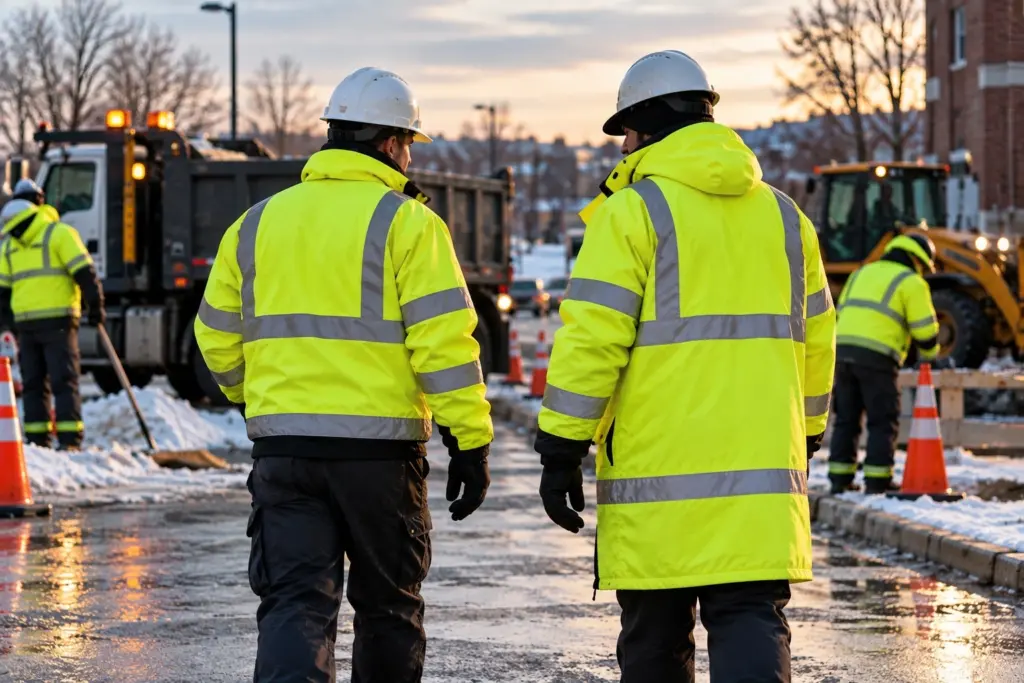
The best high-visibility jackets and coats for Hamden, CT do three things. They match the ANSI class, suit the weather, and fit over layers. Get those right and a jacket can outlast the winter.
Site leads, fleet managers, and business owners all face the same problem. Crews need to be seen near traffic, equipment, and campus roads. Winter makes that harder. Short days, wet snow, and bulky layers all work against you. So where do you start?
Hi-Vis Jackets vs. Hi-Vis Coats: What’s the Difference?
A hi-vis jacket is shorter, lighter, and built for movement. Coats run longer and usually carry more insulation. Both use bright fabric and reflective tape. Length and warmth set them apart.
So which do you need? Think about how your crew works. Shopping for high-visibility coats in Hamden, CT, crews can wear through January? Start with length and insulation. A simple rule helps. Moving a lot? Pick a jacket. Standing still in the cold? Pick a coat.
When a Jacket Makes More Sense
- Active work with lots of reaching and lifting.
- Mild to cool days.
- Crews who add their own warm layers.
When a Coat Makes More Sense
- Long stretches standing still at a roadside post.
- Deep cold and wind.
- Early starts and late finishes.
- Wet snow days.
What Makes a Hi-Vis Jacket Last Past One Winter?
Hunting for high-visibility jackets for Hamden, CT crews can trust? Look at a few traits first. Tight stitching, tough fabric, and tape that stays bonded. You can check most of them in a minute. Check these by hand:
- Reinforced stitching at the shoulders, pockets, and underarms.
- Fabric with a tight weave that resists snags.
- Zippers and snaps that feel solid, not flimsy.
- Reflective tape with no peeling edges.
Here’s a pattern you’ll see on busy sites. The jacket gets blamed when size is the real problem. Too tight, and seams strain at the shoulders. And washing wears tape down over time, while dirt buries it. A grimy jacket doesn’t reflect like a clean one. If the tape looks faded, flaky, or cracked, replace the jacket.
Follow the care label too. Hot dryers and harsh detergents can wear tape down faster. Fit matters as well. Our hi-vis range runs from XS through 8XL. Most crews can find a size that doesn’t strain the seams. Buying for a big crew? Ask for a sample. Wear it for a shift. Then decide.
ANSI Types and Classes
ANSI/ISEA 107 is the U.S. standard for high-visibility apparel. It sorts garments two ways. Type covers where you work. Class covers how much visible material the garment has. Many employers and job sites ask for it. A flagger on a busy road and a warehouse worker need different gear. Why bother with Class? A worker who’s easier to spot gives drivers more time to react.
Type: Where You Work
- Type O covers off-road work, like yards and warehouses.
- Roadway work near traffic falls under Type R.
- Public safety work, like emergency response, uses Type P.
Class: How Much Visibility You Get
The ANSI Class 2 vs Class 3 question comes down to speed and light. Class 2 is the usual minimum for roadway work. Step up to Class 3 when traffic is fast, or light is low. It adds more bright fabric and reflective material.
Reading the Tag
Find the tag inside the jacket. Look for the ANSI/ISEA 107 mention, the Type, and the Class. A small pictogram usually shows them too.
Pants can help too. Add Class E pants or bibs to a Class 2 top. Together they make a Class 3 outfit. Check the tag for Type and Class. Not every hi-vis garment meets ANSI. When in doubt, ask your supplier to confirm.
Which Hi-Vis Jacket Fits Which Job?
Match the jacket to the work, not just the forecast. This guide to high-visibility jackets and coats for Hamden, CT starts with the job.
| Style | Best for | Weather | Watch for |
|---|---|---|---|
| Shell rain jacket | Wet road and site work | Rain, wind | Little warmth alone |
| Softshell | Active crews | Cool, dry | Not for deep freeze |
| Insulated winter jacket | Long outdoor shifts | Cold, snow | Bulk can limit reach |
| Multi-layer jacket | Changing weather | Mixed | Check the tag for Class |
| Reversible vest | Quick visibility layer | Mild | Needs a base layer |
Rainy days call for a waterproof hi-vis rain jacket. Deep cold calls for an insulated hi-vis jacket. Active crews often like a hi-vis softshell jacket in between.
Job type matters too. Construction and roadway crews often need Class 3. Landscaping and snow-removal teams care more about warmth and water resistance. Facilities and campus crews usually want something lighter they can wear all day. Our construction, utility, and transportation pages show how we outfit those teams.
Pick a color that contrasts with the work area. Check job site rules too, since some sites require a specific color.
Need a fast fix on a mild day? A reversible vest slips over a work jacket.
How to Stay Warm and Visible in a Connecticut Winter
Layer smart. Wear a moisture-wicking base, an insulating mid-layer, and a hi-vis shell on top. Picture a crew on Whitney Avenue at 6 a.m. in January. Now picture one off Dixwell Avenue. Same cold, same dark.
Layering Without Losing Visibility
Everyone’s done the hoodie-under-the-jacket thing. And then you can’t lift your arm. Bulky layers pull a jacket tight. Tight jackets ride up and shift the tape out of place. Size up if you’re wearing a hoodie underneath. Check that the tape still sits where it should. Hoods deserve a look too. A bulky hood can cover the tape on the back. Cuffs should seal around gloves without riding up.
Wet Snow vs. Dry Cold
Wet snow soaks through fast. A water-resistant shell keeps insulation dry. Dry cold is different. There, insulation matters more than waterproofing. Our fleece jackets, work coats, and rain gear can all be layered with hi-vis.
Short Days and Low Light
Winter dawns come late, and dusk comes early. Plenty of crews work in the dark at both ends of a shift. That’s when reflective tape does the heavy lifting. It’s also when a higher Class earns its keep.
When Hi-Vis Alone Isn’t Enough
Standard hi-vis jackets aren’t flame resistant unless they’re made and labeled that way. Crews near arcs, flames, or hot work may need FR gear. Talk to your safety lead first. Then look at FR hi-vis and FR outerwear. Hi-vis and FR are separate needs. Some garments combine both, but check the tag. Not sure what your crew needs? Your safety lead or site manager can confirm.
How to Add a Logo Without Hurting Visibility
Keep the logo off the reflective tape. Chest and upper back are common spots, but the right layout depends on the jacket. Plan custom hi-vis jackets with logo placement mapped out before you order. It saves a redo later. Small, simple logos stay readable on bright fabric. Dark thread tends to show best.
Embroidery, screen printing, DTF, and heat-seal all happen in-house at our New Haven store. We also add reflective striping where visibility matters. Start with our custom workwear options.
When Should You Replace a Hi-Vis Jacket?
Replace a hi-vis jacket when the color or tape stops doing its job. No fixed number of washes fits every crew. Use, washing, and dirt all change the timeline.
- Faded color that looks dull or washed out.
- Tape that peels, cracks, or flakes.
- Torn seams, broken zippers, or frayed cuffs.
- Stains or grime covering the tape.
- A fit that no longer works over winter layers.
Spot checks beat guessing. Have supervisors look over jackets at the start of each season. A few minutes now beats a safety problem later.
Common Mistakes When Ordering Hi-Vis for a Crew
Most ordering errors are easy to avoid. Here are the usual suspects:
- Buying by color alone and skipping the Type and Class.
- Ordering one size for everyone.
- Putting the logo over reflective tape.
- Forgetting rain and cold options until the first storm.
Each one costs money. A returned order costs time too.
A Quick Checklist Before You Order for a Crew
Run through this list first:
- Confirm the Type and Class your job requires.
- Collect sizes with layers in mind.
- Cover rain, cold, and mild days.
- Approve logo placement away from the tape.
- Check the tag for Type, Class, and any FR rating.
- Plan for replacements as jackets wear out.
Not sure about your Class? Ask. A quick call beats a returned order. Print this list and hand it to whoever places the order.
Why Work Hard Dress Right?
Work Hard Dress Right (WHDR) is a workwear and uniform supplier in New Haven, CT. It has 25+ years in the business. Our store is located at 2 Howe Street, Suite B, New Haven, CT 06511. We supply high-visibility jackets and coats for Hamden, CT businesses. Order one jacket or outfit a full crew. Here’s what you get:
- 25+ years of fitting crews across many industries.
- In-house embroidery, printing, and striping.
- Direct purchase with no minimums.
- Branded apparel programs with ordering portals and allowances.
- A hi-vis range that includes Portwest and Red Kap styles.
And if you’re not sure where to begin, a short call can narrow it down. We’ll ask about the job, the weather, and your headcount.
Ready to Outfit Your Crew?
The right jacket comes down to the job, the weather, and the label. Get those right, and your crew stays seen and warm. Crews wear what’s comfortable. Comfortable jackets get worn. Looking for high-visibility jackets and coats for Hamden, CT teams? Contact us, and we’ll match your crew to the right gear.
FAQs
1. Where can I buy hi-vis jackets near Hamden, CT?
Our New Haven store at 2 Howe Street, Suite B serves Hamden businesses. You can also order online and have your gear shipped.
2. What’s the difference between Class 2 and Class 3 hi-vis?
Class 3 has brighter fabric and more reflective material than Class 2. It suits fast traffic and low light. Class 2 is the usual minimum for roadway work.
3. Can I add my logo to a hi-vis jacket?
Yes. We handle embroidery, screen printing, DTF, and heat-seal in-house. Keep the logo clear of the reflective tape.
4. Do you carry winter hi-vis jackets?
Yes. Our hi-vis range includes winter traffic jackets, softshells, and multi-layer styles. Check sizes online or call the store.
5. Can a small team order without a minimum?
Yes. Direct purchase lets you order what you need, whether that’s one jacket or a hundred. There’s no pressure to overbuy.