
Grocery Workwear Uniforms Built for Millburn, NJ Teams
Nov
A cashier on Millburn Avenue stands in one spot for hours. A deli worker moves between a hot counter and a cold case. The stockroom crew hauls boxes before the store opens. Put all three in the same polo and apron, and somebody’s going to be uncomfortable by noon. That’s where a lot of grocery workwear uniforms in Millburn, NJ go wrong. They get picked once, for looks, and nobody checks how they hold up in each department.
Below is what each role tends to need, the ordering mistakes that cost small grocers money, and how to set up a program that doesn’t eat your week.
What Millburn Grocery Teams Need From a Uniform
Smaller grocers, specialty markets, delis, and bakeries usually buy uniforms differently than big chains do. There’s no corporate uniform department. The owner or a store manager handles it between deliveries, schedules, and everything else.
That makes the choice matter more. Grocery store uniforms for a shop with one or two locations have to do a few things well:
- Look clean at 7 a.m. and still presentable at closing
- Let people bend, reach, and lift without pulling or riding up
- Hold up to frequent washing
- Make staff easy for customers to find
- Match when you reorder six months from now
Customers size up a store fast. Staff in matching, tidy clothes make it look organized before anyone says a word. It’s not the whole picture, but it’s part of it.
Uniforms by Department: Cashiers, Produce, Deli, Bakery, and Stockroom
Different departments, different problems. Here’s a starting point for grocery employee uniforms in each one.
| Department | What the Job Is Like | What Tends to Work | Watch Out For |
|---|---|---|---|
| Cashiers and Front End | Standing in one spot, talking to customers all day | Polo or button-up shirt with a name tag | Stiff collars and scratchy fabric |
| Produce | Wet hands, lots of bending and restocking | Easy-care polo with an apron that covers the front | Light colors that show water spots |
| Deli and Prepared Foods | Heat, splashes, constant handwashing | Short-sleeve shirt, bib apron, hat or hair covering if your local rules call for it | Long sleeves that drag through food |
| Bakery | Early starts, flour, warm ovens | Lightweight shirt, apron, and a cap | Dark colors that show flour |
| Meat Counter | Cold, wet, messy | Heavier bib apron over a work shirt | Short aprons that leave shirts exposed |
| Stockroom and Receiving | Lifting, cold dock doors, box cutters | Work shirt or tee, pants with room to move, outer layers | Tight cuts and loose, snagging sleeves |
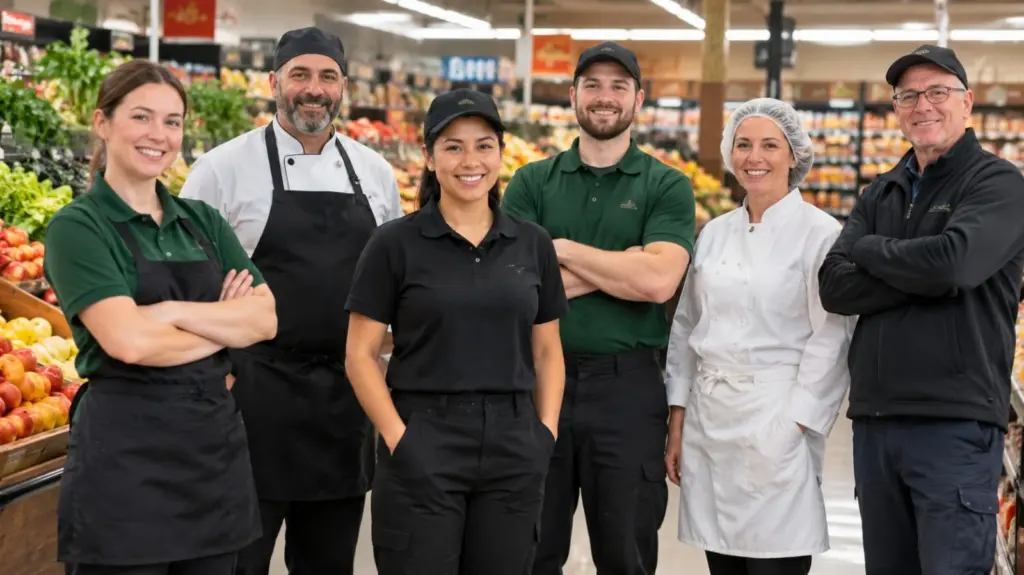
A setup that works for many stores: one brand color across the whole building, with the garment changing by role. Polos up front, aprons in the departments, work shirts or tees in the back. The team still reads as one crew, and nobody’s wearing the wrong thing for the job. Deli uniforms, bakery uniforms, and produce department uniforms can share a color and still differ in cut.
These are starting points, not rules. Ask your own staff what bugs them about the current gear. They’ll tell you.
Dressing for Cold Rooms, Hot Counters, and Jersey Winters
Grocery stores are strange places for clothing. The bakery runs warm. The walk-in is cold. The receiving door opens straight onto January. One person can go through all three in a single shift.
Layers solve most of it. A few pieces worth having on hand:
- Fleece jackets or vests for people who go in and out of cold storage
- Work coats for receiving crews unloading trucks in winter
- Lightweight, breathable shirts for ovens, fryers, and hot counters
- Sweatshirts for early opening shifts, with your logo on them
Put the logo on the outer layers too. Otherwise, the stockroom crew looks like a different business once they zip up. When you’re planning grocery workwear uniforms in Millburn, NJ, build the cold-weather pieces in at the start instead of scrambling in December.
Aprons, Name Tags, and Logos That Survive Daily Washing
Aprons do a lot of the work. Bib aprons cover the front of the shirt at deli and prep counters. Butcher aprons run longer and heavier for the meat department. Waist aprons suit stocking and produce, where you want pockets and free arms.
Names matter more in a neighborhood market than most owners expect. Regulars start to know the people behind the counter, and a name on the shirt makes that easier. Custom grocery store uniforms mostly come down to how the logo gets on the garment. You’ve got a few options:
- Embroidery tends to hold up well on polos and button-ups
- Screen printing works for large runs of tees and sweatshirts
- DTF transfers handle detailed, multicolor artwork on suitable fabrics
- Heat-seal is quick and clean for patches and smaller marks
Whichever you pick, put the logo in the same spot on every piece. A small left-chest placement is the safe default. We handle custom logo embroidery, printing, and heat-seal in-house, so reorders match the first batch.
Footwear for Wet, Busy Floors
Grocery staff are on their feet all shift. Floors get wet near produce misters, deli sinks, and the front door on rainy days.
Look for cushioned, slip-resistant shoes that fit well. Fit matters as much as the sole, because a shoe that’s slightly off will bother someone by the third hour. It’s also worth confirming any footwear requirements with your manager or insurance carrier before you order for the whole store.
We also run footwear managed programs, which cover sizing and delivery for a full crew. That’s worth a look if you’ve got more than a handful of people to outfit.
Keeping Staff Polished at Specialty and Neighborhood Markets
Downtown Millburn packs boutiques, hardware stores, and restaurants along Millburn Avenue. Short Hills has the mall and a hotel nearby. A grocery counter in that mix gets compared to everything around it.
You don’t need anything fancy. You need clothes that look cared for. A few habits help:
- Pick one or two brand colors and stay with them
- Retire stained or faded pieces instead of stretching them another season
- Give managers a distinct shirt so customers know who to ask
- Keep name tags and embroidery consistent across the team
Grocery workwear uniforms in Millburn, NJ don’t need to be fancy. Tidy beats trendy. A plain polo that’s clean and fits well does more than a showy one that doesn’t.
Buying vs. Renting Grocery Uniforms
Rental programs are common. They handle pickup and laundering, which is a real draw. The trade-off is that rentals can cost more over time, and you usually pick from a limited set of styles.
Buying tends to fit when you want to:
- Choose your own styles, colors, and brands
- Order only what you need, when you need it
- Own the garments instead of paying for the same shirt over and over
Rental tends to fit when you’d rather have someone else launder everything, and you’re fine paying a steady fee for that.
Our Direct Purchase Program lets you buy as you go and review each order, so smaller teams can start there. Bigger stores can move into a managed program later.
How a Managed Grocery Uniform Program Works
Once one-off orders start taking up your time, a program can take over the paperwork. The basic flow looks like this:
- Pick gear by role. Tell us what each department does, and we’ll match garments to the work.
- Add your branding. Logos and names get done in-house, so there are no outside vendors to chase.
- Set up the portal. Our branded apparel programs include an ordering portal, employee allowances, and shipping.
- Reorder as people come and go. New hires get gear that’s ready for them, and replacements go through the portal instead of email chains.
That’s the idea behind our managed uniform program. Managers spend less time chasing sizes and replacements. It also makes grocery workwear uniforms in Millburn, NJ easier to keep consistent if you ever open a second location.
Prefer to keep it simple? You can order grocery uniforms online and have them shipped to the store.
Ordering Mistakes That Cost Grocers Money
Most grocers hit the same few snags. These are the ones that cost real money:
- Ordering only for current staff. Turnover and seasonal hires mean you’ll need spares in the common sizes, so keep a small stock.
- Changing styles or colors between reorders. Navy from one batch can look different from navy in the next, so lock in the exact style and color first.
- Putting logos in different spots. It looks minor until the whole team’s standing together.
- Skipping a trial run. Have a few staff wear sample pieces for a week or two before you outfit everyone.
- Forgetting cold-weather gear until the first cold snap. Orders take time, and everyone wants coats at once.
Why Choose Work Hard Dress Right
We’ve been outfitting teams for more than 25 years, and grocery is one of the industries we serve. You can see the range on our grocery store uniforms page.
- Polos, aprons, and shirts from Edwards and SanMar for store and stockroom teams
- In-house embroidery, screen printing, DTF, and heat-seal
- Direct purchase for small orders, managed programs for bigger ones
- A showroom at 283 Ferry Street in Newark’s Ironbound, east of Millburn, where you can check fabrics and sizing in person
- Online ordering that ships to your store if you can’t make the trip
Looking for a uniform store near Millburn? Visit our page for workwear and uniforms in Millburn or call (973) 465-0900 to get a quote. Tell us how many people you’ve got and what each department does, and we’ll put together grocery workwear uniforms in Millburn, NJ that fit the way your store actually runs.
FAQs
1. How Many Uniform Pieces Should Each Grocery Employee Have?
A common starting point is two to three shirts per person, so there’s one to wear, one in the wash, and a spare. Full-time staff may want more.
2. Should Grocery Employees Wear an Apron or a Smock?
Aprons suit counters and food prep because they’re easy to swap and wash. Smocks cover more of the body but can run warmer. Pick by department.
3. Can I Order Grocery Uniforms Without Visiting the Store?
Yes. You can order online and have everything shipped to your store. If you’d rather see fabrics and check sizing first, the Newark showroom is open for visits.
4. What’s the Difference Between Renting and Buying Uniforms?
Rentals usually include laundering for a recurring fee. Buying means you own the garments and choose the styles, but you handle the washing.
5. What’s the Best Way to Put a Logo on Grocery Uniforms?
For grocery uniforms with a logo, embroidery tends to work well on polos and button-ups. Screen printing suits big runs of tees and sweatshirts, and DTF or heat-seal can handle detailed or smaller marks.
6. How Do I Handle Seasonal or New Hires?
Keep a small stock of common sizes so a new person isn’t waiting on an order. If you’re in a managed program, replacements go through the ordering portal.
7. What Colors Work Best for Grocery Uniforms?
Match your brand colors first. Darker shades tend to hide stains, while lighter ones can look fresh but show marks faster. Try a few sample pieces on your own staff before you commit.