
Explore the History of Cargo Pants
Apr
Few garments have traveled as far from their original purpose as cargo pants. What began as a practical military design evolved into a cultural icon that spans industries, fashion movements, and professional settings.
The history of cargo pants reveals a story of innovation meeting real-world needs, a principle that continues to guide uniform programs today.
The Origin of Cargo Pants
The origin of cargo pants began as a way to solve a seemingly simple challenge: how to help soldiers carry essential equipment without sacrificing mobility. In the 1930s, the British military developed what would become the blueprint for modern cargo pants. These early designs prioritized function over form by introducing large, bellowed pockets positioned at thigh level where soldiers could access ammunition, maps, and field supplies quickly and efficiently.
Military Beginnings
The cargo pants origin story continued to evolve during World War II, when British forces refined the design for paratroopers and combat soldiers. The iconic Battle Dress uniform featured reinforced cotton twill fabric and multiple external pockets secured with buttons or flaps. That uniform is said to be the inspiration for the American M-1942 paratrooper uniform.
From Functionality to Fashion
After the war ended, military surplus flooded civilian markets. Returning soldiers and everyday Americans started wearing cargo pants because of their practicality. The transition from battlefield to civilian life marked the beginning of a broader transformation, as these functional military garments influenced workwear, outdoor recreation gear, and eventually mainstream fashion.
The Evolution of Cargo Pants Through the Decades
Cargo pants’ history shows how cultural attitudes toward utility and style can help shift the trajectory of an item of clothing from pure function to a versatile wardrobe staple.
1940s–1960s
Throughout the post-war period, surplus military clothing became accessible and affordable. Workers in construction, manufacturing, and outdoor industries recognized the practical benefits of cargo pants and started wearing them. The extra pocket space made carrying tools, measuring devices, and safety equipment easier and eliminated (or reduced) the need for additional bags and belts.
During this era, cargo pants remained firmly in the workwear category. These pants were ideal for people who needed the flexibility and functionality that made it possible to do their work under demanding conditions.
1970s–1990s
The 1970s brought cargo pants into unexpected territory. Outdoor enthusiasts and hikers adopted them for recreation, thanks to the storage capacity for trail maps and light gear. By the 1980s, skateboarding and hip-hop cultures embraced baggy silhouettes and functional design, bringing cargo pants into youth fashion and streetwear.
The 1990s represented the peak of mainstream cargo pants popularity. Fashion designers reinterpreted the military aesthetic, creating versions in a wide variety of fabrics and fits. What started as utilitarian workwear became a cultural symbol, appearing everywhere from music videos to suburban shopping malls. The practicality remained, but cargo pants had officially entered the fashion conversation.
Modern Cargo Pants
Today’s cargo pants combine style with lessons learned from decades of use. The fundamental design of cargo pants — reinforced fabric with strategically placed pockets — persisted because it solves real problems.
Contemporary Designs and Innovations
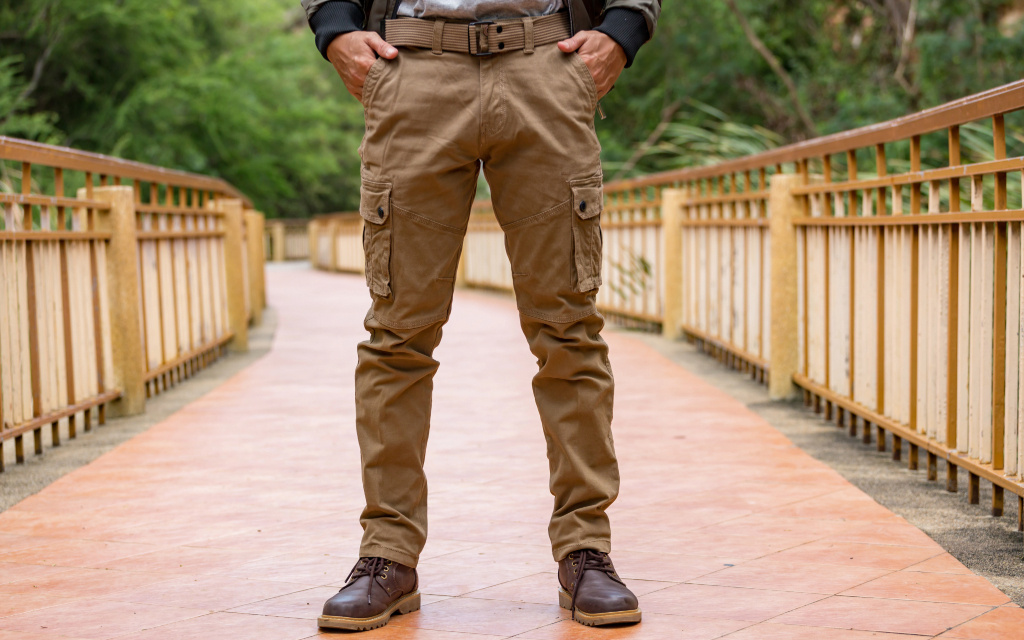
Modern cargo pants incorporate technical fabrics that resist stains, repel water, and withstand repeated industrial washing. Manufacturers have refined pocket placement for better weight distribution and added more features, including reinforced knees, adjustable waistbands, and breathable mesh panels. Slimmer cuts help cargo pants maintain a more professional appearance without sacrificing the storage capacity that defines the style.
These innovations make cargo pants suitable for environments ranging from hospital corridors to construction sites, proving that functional design adapts instead of disappearing.
How Cargo Pants Have Retained Their Popularity
Cargo pants endure because they deliver real usefulness and real value. Culinary teams can use cargo pants to carry thermometers, rags, and notepads. Industrial workers wear cargo pants to safely carry equipment and communication devices. Cargo pants serve modern workplaces as effectively as they’ve served soldiers for decades.
Cargo Pants as Modern Workwear
For organizations seeking durable, useful uniform solutions, cargo pants represent proven performance. Their history demonstrates that well-designed functional clothing can improve efficiency, reduce the need for additional carrying equipment like belts, and enhance mobility.
Functionality Meets Style
Modern cargo pants help you balance utility with brand consistency. Clean lines and professional finishes maintain the image you want your organization to present, while pockets and durable construction support daily tasks. This combination makes cargo pants ideal for industries where staff must look professional while remaining prepared for hands-on work.
Customizable Options
At Work Hard Dress Right, we recognize that the evolution of cargo pants from military necessity to workplace essential reflects our own approach to uniform solutions. Our in-house customization capabilities ensure that functional garments like cargo pants carry your brand identity consistently. We partner with organizations to develop uniform programs that improve workers’ professional appearance while meeting their practical demands.
Whether outfitting healthcare teams, industrial crews, or culinary professionals, we can customize workwear to your specifications.
Incorporate Cargo Pants as a Part of Your Work Uniforms
The history of cargo pants teaches us that the best workwear solves real problems and adapts to changing needs. Organizations in the healthcare, hospitality, industrial, and municipal services industries can benefit from incorporating cargo pants into their uniform programs. Our custom workwear provides your teams with the storage, durability, and mobility they need while maintaining the professional, branded appearance your organization requires.
Ready to explore how you can bring the history of cargo pants into your uniform program? Contact us for a consultation and discover how we can deliver solutions tailored to the specific demands of your business.
History of Cargo Pants FAQ
Where did cargo pants originate?
Cargo pants originated in the British military during the 1930s and were refined during World War II for paratroopers and combat soldiers. The original designs featured large, bellowed pockets at thigh level, allowing military personnel to carry essential equipment while maintaining mobility in demanding battlefield conditions.
What do cargo pants symbolize?
Cargo pants symbolize preparedness, reliability, and functional design. They represent the principle that clothing should actively support the wearer’s tasks rather than simply provide coverage. From their military origins to modern workwear applications, cargo pants embody the idea that thoughtful design can deliver real value in demanding environments.
Have a Question or Project in Mind?
We help organizations with managed uniform programs, branded apparel, print, signage, and promotional programs across multiple locations.
Let’s connect and start a conversation.