
Workwear Coveralls and Bibs in Newark, NJ: A Complete Guide
Oct
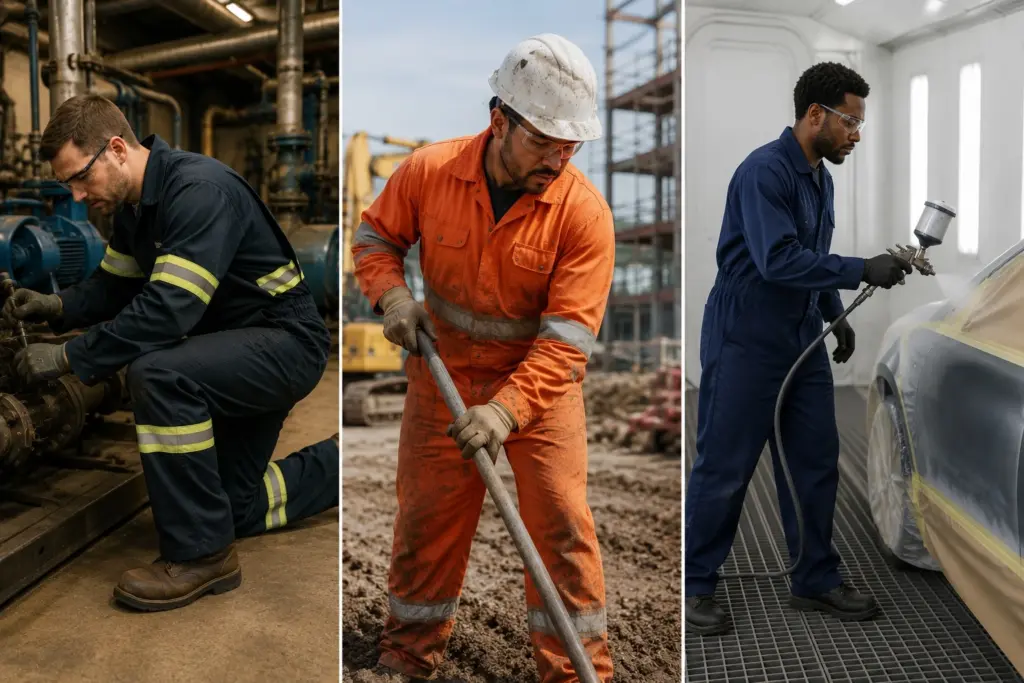
Premium workwear Coveralls and Bibs in Newark, NJ need to survive real job conditions, not just look tough on a hanger. Grease, dust, and constant wear-and-tear don’t care what your budget is. Construction crews, mechanics, maintenance techs, and warehouse staff all reach for this category for the same reason: regular clothes don’t hold up, and a full-coverage garment protects what’s underneath it.
This isn’t a product list. It’s a real breakdown of what separates a good coverall from a bad one, when a bib overall actually makes more sense, and how to pick the right option instead of guessing. Newark’s mix of construction, automotive, industrial, and utility work means no single coverall style covers every need in this city; the right choice depends entirely on what the job actually throws at it.
What Are Workwear Coveralls and Bibs?
Coveralls are a one-piece, full-body garment, with arms, legs, and torso covered in a single suit. Bib overalls cover the legs and torso with a bib front and shoulder straps, worn over a shirt underneath.
The real difference isn’t just coverage. Coveralls give maximum protection but less ventilation and more time to put on and take off. Bib overalls breathe better and layer easier, since a shirt underneath can change with the weather without swapping the whole garment.
Workwear Coveralls and Bibs in Newark, NJ suit different jobs. Coveralls work well for messy automotive or grease-heavy tasks, while bib overalls offer better ventilation and layering for outdoor work. The right choice depends on the job, conditions, and level of coverage needed.
Performance Coveralls: OilBlok and Touchtex™ Technology
Not every coverall is built for garage-level abuse. WHDR’s Performance Lightweight Coverall uses OilBlok and Touchtex™ technology specifically, fabric engineered to keep tough fluids from forming stains while resisting color fade and releasing dirt in the wash.
These coveralls also use ripstop fabric that resists tears, with stretch panels placed at stress points for actual mobility instead of a stiff, boxy fit. For automotive and mechanical work specifically, this is the tier worth paying for the difference between a coverall that still looks presentable after a year and one that’s a stained, torn mess within months. A standard cotton coverall might cost less upfront, but it’s not solving the same problem this fabric technology is built for.
Hi-Vis and Insulated Coveralls: Cold Weather and Visibility
Some jobs need more than coverage. Hi-vis coveralls exist for construction, transportation, energy, and utility work, with ANSI-compliant styles built to keep crews visible without sacrificing comfort.
For cold-weather conditions, insulated hi-vis coveralls add warmth while maintaining mobility and visibility in low-light settings, a real consideration for anyone working outside through a Newark winter, not just an added feature for the sake of it. Cold hands and stiff joints slow work down and create real safety risks, and insulated coveralls solve that without sacrificing the visibility a roadside or job-site crew actually needs.
Women’s Coveralls and Bibs, A Real Fit, Not Unisex
A lot of “women’s” workwear is just a men’s cut ordered smaller. That’s not the same as an actual women’s fit.
WHDR carries genuine women’s-specific bibs, the Gritman Bib and the Gritman Insulated Bib, built with real proportions instead of a shrunk-down men’s pattern. If a crew includes women and everyone’s still stuck in unisex sizing, that’s usually the reason fit complaints keep coming up. A garment that fits wrong through the shoulders or waist doesn’t just look off;f, it restricts movement exactly where a coverall needs to move with the body, not against it.
FR Coveralls: When Flame Resistance Is Non-Negotiable
Standard coveralls don’t belong anywhere near arc flash or flash fire risk. FR coveralls solve a different problem entirely, and the brand choice actually matters here.
Ariat FR workwear leans on durability. Wrangler FR brings a different fit and price point. Bulwark FR offers real range: coveralls, jackets, shirts, and pants, built specifically for oil and gas, utilities, and manufacturing hazards, with features like triple-stitched seams and reinforced stress points. Choosing between them comes down to the specific hazard a role faces, not just picking whichever name is most familiar. A hazard assessment, not a brand preference, should be what actually drives this decision.
Disposable and Protective Coveralls: A Different Category Entirely
Not every coverall on the market is meant to be washed and reworn. Disposable and limited-use protective coveralls, built to specific protection type standards, exist for contamination control, hazardous material handling, or short-term protective use where reusable workwear isn’t the right tool.
Confusing this category with standard durable coveralls is an easy mistake. They solve a different problem and aren’t built for daily wear over months of use. Using a disposable coverall for regular daily work, or a durable coverall for single-use contamination control, means the wrong tool ends up doing the wrong job either way.
Best Coveralls and Bibs by Industry
Construction Workers
Construction crews lean toward heavy-duty insulated coveralls and hi-vis bibs for cold-weather, high-visibility job sites.
Automotive and Mechanics
Automotive and mechanics benefit most from OilBlok and Touchtex™ performance coveralls, built specifically for grease and fluid exposure.
Maintenance and Repair Professionals
Maintenance and repair professionals often do well with standard cotton or blended coveralls, durable enough for daily wear without the specialized features a mechanic or utility worker needs.
Industrial and Warehouse Workers
Industrial and warehouse workers typically need durability and mobility over specialized coatings, making standard or lightweight coveralls the practical choice.
Landscaping and Outdoor Workers
Landscaping and outdoor workers tend toward bib overalls for the breathability and layering flexibility outdoor temperature swings require.
How to Choose the Right Size and Fit
A coverall or bib that fits wrong defeats its own purpose fast. Sizing charts help, but they’re a starting point, not a guarantee; the same size label can fit differently across brands and styles.
When choosing the right size and fit, keep these points in mind:
- Check your measurements: Take accurate chest, waist, and inseam measurements instead of relying only on your regular clothing size.
- Allow room for movement: Make sure the shoulders and knees have enough space for bending, reaching, kneeling, and other regular work movements.
- Consider layering: If you’re working in cold weather, leave enough room for a sweatshirt or other layers underneath.
- Check the inseam and overall length: Avoid coveralls that bunch around the ankles or ride up uncomfortably while working.
- Try the garment on when possible: Different brands and styles can fit differently even when the size label is the same. Trying them on in person can help prevent ordering the wrong size for an entire crew.
Taking the time to get the fit right helps ensure your coveralls or bibs remain comfortable and practical throughout a full workday.
How to Care for Coveralls and Bibs
Coveralls take a beating, and the wrong care routine shortens their life fast. Proper care helps maintain the fabric, fit, and performance of your workwear over time.
When caring for your coveralls and bibs, keep these points in mind:
- Follow the fabric’s care requirements: Cotton, blended, and technical fabrics like OilBlok-treated coveralls don’t all respond the same way to hot water or heavy detergent.
- Treat stains promptly: Deal with grease and oil stains as soon as possible rather than letting them set through multiple wash cycles.
- Check for wear regularly: Inspect zippers, seams, and pockets for early signs of damage. A small tear that is ignored can become a larger repair or replacement issue.
- Store workwear properly: Hang or fold coveralls when they are clean and dry rather than leaving them balled up while damp, which can contribute to mildew and fabric breakdown.
- Replace seriously worn garments: When the fabric starts thinning at stress points, a zipper no longer holds, or tears keep reopening, replace the garment instead of pushing it through another season.
Taking care of your coveralls and bibs properly can help extend their useful life while ensuring your workwear remains comfortable and practical for the job.
Compare Workwear Coveralls and Bibs by Type
|
Type |
Best For | Key Feature |
Consideration |
|
Standard Cotton/Blended Coverall |
Everyday maintenance and repair work | Durable, breathable, stain-resistant |
Fewer specialized features |
|
Performance Coverall (OilBlok/Touchtex™) |
Automotive and mechanical work | Fluid resistance, ripstop, stretch panels |
Higher cost than standard coveralls |
|
Hi-Vis Insulated Coverall |
Cold weather, roadside/construction | ANSI-compliant visibility plus warmth |
Bulkier than non-insulated options |
|
Women’s Bib (Gritman) |
Female crew members | Women’s-specific fit and proportions |
Bib-style rather than full coverall |
|
FR Coverall |
Jobs with identified flame/arc hazards | Flame-resistant rated fabric |
Must match the specific hazard requirements |
|
Disposable/Protective Coverall |
Contamination control, short-term use | Limited-use protection |
Not built for daily, long-term wear |
Why Choose Work Hard Dress Right for Coveralls in Newark, NJ
Outfitting a mixed crew shouldn’t mean sourcing coveralls from three different vendors. Work Hard Dress Right carries the range in one place, out of the Newark location at 283 Ferry Street:
- Standard, performance, hi-vis, insulated, women’s, and FR coveralls and bibs under one roof
- Real verified technology, OilBlok, Touchtex™, and genuine women’s-specific fits like the Gritman line
- FR options across Ariat, Wrangler, and Bulwark, matched to the actual hazard a role faces
- Local pickup for trying fit and fabric in person before a bulk order
- In-house customization so branding doesn’t add weeks to an order
That range matters most once a business is outfitting more than one role or industry at once. A single supplier covering standard, performance, and FR needs means fewer vendors to manage and one point of contact when something needs reordering fast.
Common Mistakes Buying Coveralls and Bibs
- Choosing a standard coverall for automotive or mechanical work instead of a performance option built for fluid resistance
- Ordering unisex sizing instead of a genuine women’s fit
- Confusing disposable protective coveralls with durable, reusable workwear
- Skipping FR-rated gear for a role that actually needs it
- Ignoring proper sizing and ending up with coveralls that restrict movement or bunch at the ankles
- Waiting too long to replace worn-out coveralls instead of catching wear early
Choosing the right workwear from the start can help avoid unnecessary replacements, poor fit, and safety concerns. Match the coveralls or bibs to the job, working conditions, and needs of the person wearing them.
Conclusion
Premium workwear coveralls & bibs in Newark, NJ come down to matching the garment to the actual job, the right coverage, the right fabric technology, and the right fit for who’s actually wearing it. From everyday maintenance and automotive work to construction, outdoor jobs, and specialized FR applications, choosing the right workwear can make a real difference in comfort, durability, and job performance.
Whether you need a single pair of bibs or workwear for an entire crew, choosing the right style and fit from the start helps ensure you’re prepared for the conditions of the job. Contact Work Hard Dress Right today to find the right coveralls and bibs for your work needs in Newark, NJ.
FAQs
1. Are coveralls good for construction work?
Yes, especially hi-vis and insulated versions built for cold-weather, high-visibility job sites. Standard coveralls work too, depending on the specific task and conditions.
2. Are bib overalls comfortable for long workdays?
Generally yes, since they offer more ventilation and layering flexibility than a full coverall, making them a common choice for outdoor work with changing temperatures.
3. What is the best material for durable workwear coveralls?
It depends on the job. OilBlok and Touchtex™ treated fabric works well for automotive and fluid-exposure work, while standard cotton or blended fabric suits general maintenance and repair tasks.
4. How should workwear coveralls fit?
Roomy enough to move freely through the shoulders and knees, with an inseam and length that doesn’t bunch or ride up, and enough room to layer if the role involves cold-weather work.
5. Where can I buy workwear coveralls & bibs in Newark, NJ?
Work Hard Dress Right carries a full range of coveralls and bibs at their Newark location, with local pickup available for checking fit and fabric before committing to a bulk order.
6. What should I consider when choosing FR coveralls?
Start with the hazards and workplace requirements rather than the brand name. The FR garment should be appropriate for the specific exposure and requirements of the job.
7. Should I choose coveralls or bib overalls for outdoor work?
Bib overalls can be a practical choice for outdoor work when layering and ventilation matter. Full coveralls may make more sense when greater body coverage is the priority.