
Durable Flame-Resistant Rain Gear for Newark, NJ Crews
Oct
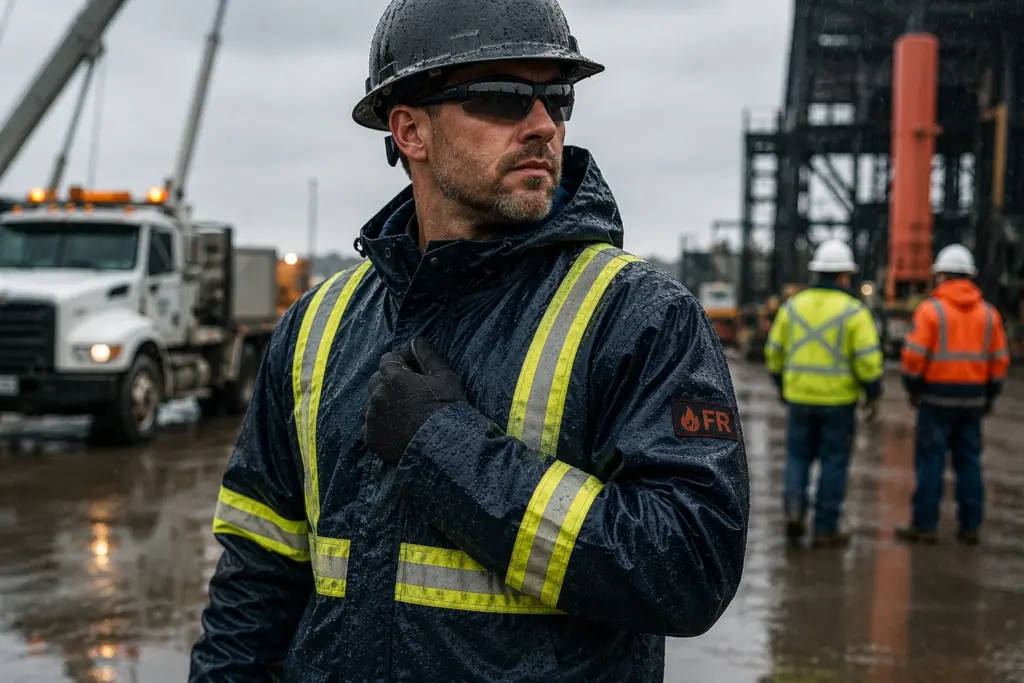
Rain doesn’t check a crew’s hazard rating before it starts. Durable flame-resistant rain gear for Newark crews matters because weather and workplace hazards don’t take turns. A wet shift near arc flash or flash fire risk needs gear that handles both problems at once, not one or the other.
Newark’s weather swings hard through the year, and outdoor crews working utility, oilfield-adjacent, or industrial jobs don’t get to wait out a storm. This guide breaks down what actually separates FR rain gear from a regular rain jacket, what it costs, and how to pick the right tier for the actual hazard a crew faces. None of this is about buying the most expensive option available; it’s about matching the gear to what the job actually demands.
Why Regular Rain Gear May Not Be Enough for FR Job Sites
A standard rain jacket does one job: keep water out. It says nothing about how the fabric behaves near flame or electrical hazard exposure, and that’s not a minor detail on the wrong job site.
Wearing non-rated rain gear over FR clothing in Newark can undermine the protection the FR layer was providing in the first place. The issue isn’t that regular rain gear is dangerous everywhere; it’s that it’s simply not built for hazards it was never designed to address. Whether it’s appropriate comes down to the specific hazards and requirements of the job, not a blanket rule.
A crew working indoors or away from ignition sources during rain has a different situation entirely from one working near energized equipment in a downpour. Treating every outdoor rainy shift as the same risk level misses the point; the hazard, not the weather, is what actually decides the requirement.
Flame-Resistant Rain Gear vs. AR: A Mix-Up Worth Getting Right
FR (flame-resistant) and AR (arc-rated) get confused constantly, and the mix-up matters. Not all flame-resistant gear carries an arc rating, and assuming the two terms mean the same thing can leave a worker under-protected for the specific hazard they’re actually facing.
Confusing FR with AR, or assuming all protective gear offers the same level of safety, can leave workers vulnerable and expose a business to real compliance risk. A mislabeled or misunderstood garment isn’t just an inconvenience; it’s a genuine liability question if something goes wrong. Getting the terminology right upfront isn’t pedantic. It’s the difference between buying gear that actually matches the hazard and gear that just sounds like it does. A label that says “flame-resistant” answers one question. Whether it’s also rated for the specific arc exposure a role faces is a separate question entirely, and one worth confirming before a bulk order goes out.
Basic vs. Premium FR Rain Gear: What You’re Actually Paying For
Not all FR rain gear solves the same problem, and the price difference reflects real functional gaps, not just branding.
WHDR’s Adult and Youth Clear Rain Jackets sit at the basic end, lightweight, straightforward rain protection at a lower price point, suited to lighter-duty exposure. The Bizflame Rain Hi-Vis Antistatic FR Bomber Jacket sits at the premium end, offering fully waterproof, multi-norm protection with chemical resistance and a detachable hood, built for harsher, more sustained exposure where a basic rain shell isn’t enough.
The right tier depends on how much real exposure a role faces, not just budget. A crew stepping outside briefly between tasks has different needs than one working sustained hours in wet, hazardous conditions. Buying premium gear for light, occasional exposure wastes money. Buying basic gear for sustained harsh conditions means replacing it sooner than expected, or worse, leaving a crew under-protected when it matters most.
Who Actually Needs FR Rain Gear: Oilfield, Utility, and Outdoor Crews
FR rainwear in Newark, NJ, is commonly used by oilfield, mining, and outdoor utility crews working in harsh conditions, roles where flame or arc hazard exposure and sustained wet-weather work overlap regularly.
Industry alone doesn’t decide the requirement:
- Whether a specific role needs FR rain gear comes down to a documented hazard assessment for that job, not just the general category it falls under.
- A utility crew working near energized equipment in the rain has a very different exposure profile than an office-adjacent role that happens to share the same job title.
- This is the mistake companies make most often: assuming an entire department needs the same gear because they share a job title, rather than looking at what each specific role actually faces day to day.
Men’s Flame-Resistant Rain Gear: Fit and Layering Over Other FR Pieces
Men’s FR Rain Gear usually gets worn as an outer layer over other FR clothing, which means fit matters differently than it would for a standalone jacket. Too tight, and it restricts movement or doesn’t fit properly over layered FR gear underneath. Too loose, and excess fabric becomes its own hazard around equipment.
A detachable hood, like the one on the Bizflame bomber, adds flexibility for changing conditions without needing a separate hooded piece. And any outer layer worn over FR clothing needs to actually be rated for that use; a jacket that isn’t FR-rated defeats the purpose of the layers underneath it, regardless of how good the rain protection itself is.
Sizing charts help, but trying a piece on over the actual FR layers a role wears underneath is the only real way to confirm the fit works in practice, not just on paper.
Flame-Resistant Rain Gear vs. Standard Rain Gear
|
Feature |
FR Rain Gear |
Standard Rain Gear |
|
Rain Protection |
Yes |
Yes |
|
Flame-Resistant Properties |
Designed for applicable FR requirements |
Not automatically FR |
|
Workplace Hazard Fit |
Selected based on the specific hazard |
May not meet workplace FR needs |
|
Jobsite Use |
Available in workwear-specific designs |
Often general-purpose |
|
Layering Over FR Clothing |
Built with that use in mind |
Not designed for this purpose |
How to Care for FR Rain Gear
Caring for FR rain gear the right way keeps it protective for longer. Here’s what that actually looks like:
- Follow the manufacturer’s specific care instructions rather than a generic wash routine.
- FR-rated fabric can lose its protective properties if washed incorrectly, and instructions vary by garment and fabric type.
- Inspect gear regularly for damage to seams, closures, and the fabric itself.
- Contamination from oil, grease, or other substances can compromise FR protection even if the garment looks intact.
- Never modify an FR garment without understanding how that change affects its rating.
- Replace a damaged garment rather than keeping it in rotation past the point where it’s actually protecting anyone.
Treat FR rain gear like safety equipment, not just outerwear; a small shortcut in care can quietly undo what the fabric was built to do.
Why Choose Work Hard Dress Right for Flame-Resistant Rain Gear in Newark, NJ
Outfitting a crew with rain gear that also meets FR requirements shouldn’t mean guessing at fit or hazard match. Work Hard Dress Right carries both ends of the range:
- Basic FR rain jackets for lighter-duty exposure
- Premium options like the Bizflame Antistatic FR Bomber for sustained, harsher conditions
- Local availability out of the Newark location for checking fit before a bulk order
- Guidance matched to the actual hazard a role faces, not a one-size-fits-all assumption
That range matters most for crews where rain and hazard exposure regularly overlap, not just occasionally cross paths. A crew that only sees rain a handful of times a year has different needs than one where wet-weather work is simply part of the regular schedule.
Common Mistakes When Buying FR Rain Gear
These are the errors that show up most often when crews get outfitted in a hurry:
- Assuming any FR-labeled garment automatically has an arc rating too
- Wearing non-rated rain gear over FR clothing undermines the protection underneath
- Choosing the cheapest option without checking whether it actually matches the hazard exposure
- Skipping a documented hazard assessment and assuming an industry label decides the requirement
- Ignoring manufacturer care instructions and washing FR gear like regular rainwear
Most of these come down to treating FR rain gear as a checkbox purchase instead of matching it to the actual hazard a role faces.
Conclusion
Reliable flame-resistant rain gear for Newark, NJ crews comes down to matching the tier and rating to the actual hazard a role faces, not just picking whatever’s waterproof. Basic options work for light, occasional exposure; premium picks like the Bizflame bomber are built for crews facing sustained wet conditions alongside flame or arc risk.
Contact Work Hard Dress Right to get gear that’s actually been checked against the hazards a role faces, not just handed out because it’s waterproof and looks the part.
FAQs
- Is Flame-Resistant Rain Gear waterproof?
Yes, though the level of waterproofing varies by garment, basic options offer lighter protection, while premium options like a fully waterproof antistatic bomber handle more sustained wet exposure.
- What is the difference between FR rain gear and regular rain gear?
FR rain gear is designed with flame-resistant properties suited to specific workplace hazards, while regular rain gear only addresses water protection and isn’t automatically appropriate for FR-required environments.
- Who needs flame-resistant rain gear?
Workers facing both wet conditions and flame or arc hazard exposure, commonly in oilfield, utility, and industrial outdoor roles, though the actual requirement depends on a specific hazard assessment, not industry alone.
- Can you wear FR rain gear over other FR clothing?
Yes, when the rain gear itself is properly FR-rated for that use. Wearing non-rated rain gear over FR clothing can undermine the protection underneath.
- What should I look for when buying men’s FR rain gear?
A fit that layers properly over other FR clothing without restricting movement or leaving excess fabric that could catch on equipment, plus a rating that matches the actual hazard the role faces.
- How should FR rain gear be cleaned and maintained?
Follow the specific manufacturer’s care instructions, inspect regularly for damage or contamination, and never modify the garment without understanding how it affects the FR rating.